Last updated: April 2026
Solaniwa Quick Facts
- Address: 1-2-3 Izumi, Minato-ku (5 min walk from Osakako Station)
- Price: ¥2,500–¥3,400 (yukata rental included)
- Hours: 11:00–23:00 (last entry 22:00)
- Tattoo: Conditional — facility's own concealing stickers required
- English: Good — multilingual signage, English website
- Best for: Couples, families, USJ / Kaiyukan day-trip pairing
- Booking: Walk-in OK; weekend afternoons fill up fast
- Website: solaniwa.com/en-us
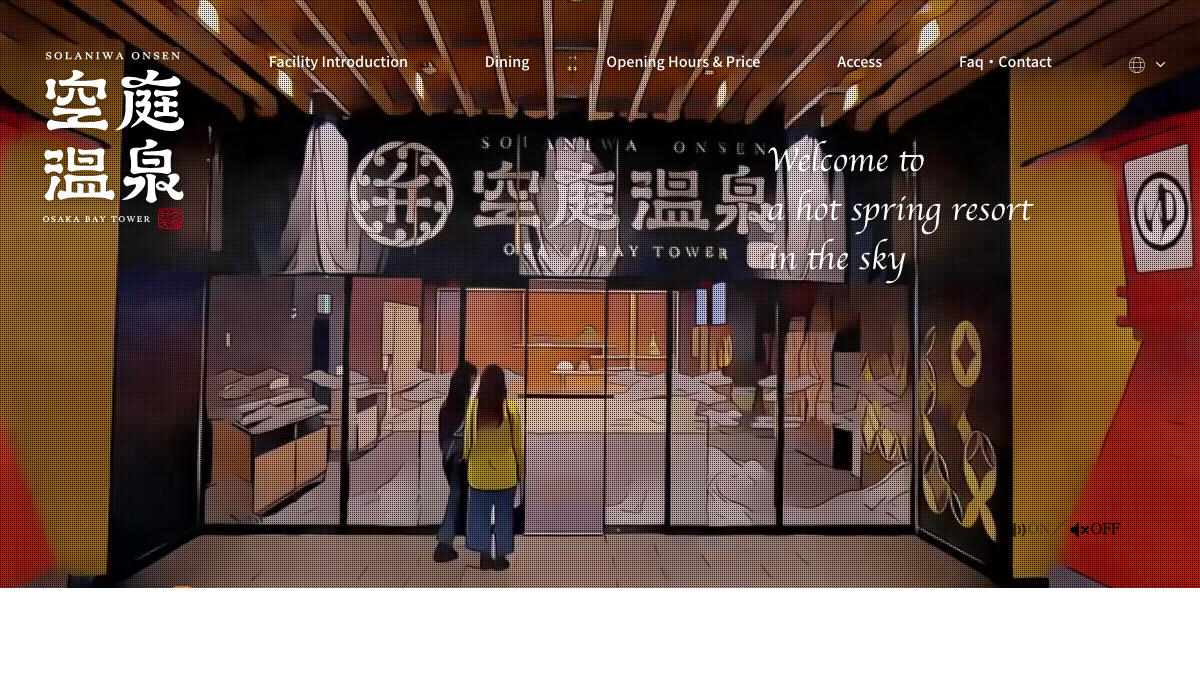
Most onsen facilities in Japan are built around a single premise: the bath is the experience, and everything else is either convenience or decoration. Solaniwa Onsen, a 15-minute train ride from Namba (難波) out to the Osaka Bay, takes a more ambitious approach. The bath is indeed the centerpiece—a genuine natural hot spring sourced from 1,000 meters below the bay floor—but the rest of the facility is a full-scale, walkable recreation of an Edo-period (1603–1868) Japanese garden, with a koi pond, stone pathways, a tea house, a yukata (light kimono) shop, a street of festival-style food stalls, and a foot bath that runs alongside the garden paths. You rent a yukata on arrival, put it on, and wander around a set-piece version of 17th-century Japan before and between your soaks.
This is, by a meaningful margin, the most visually beautiful bathing facility in Osaka and one of the most photogenic onsen complexes in all of Japan. It is also perfectly located for foreign visitors: a short walk from Osakako Station (大阪港), the gateway to Universal Studios Japan, Tempozan Harbor Village, the Kaiyukan Aquarium, and the Osaka Bay Ferris wheel. If you are spending a day on the bay, adding a Solaniwa soak to your evening is one of the easiest itinerary upgrades in the city. This guide covers what's in the building, how the sauna stacks up against the onsen, the tattoo situation, how to pair it with USJ or an aquarium trip, and what to expect as a first-time foreign visitor.
Stepping Into Edo
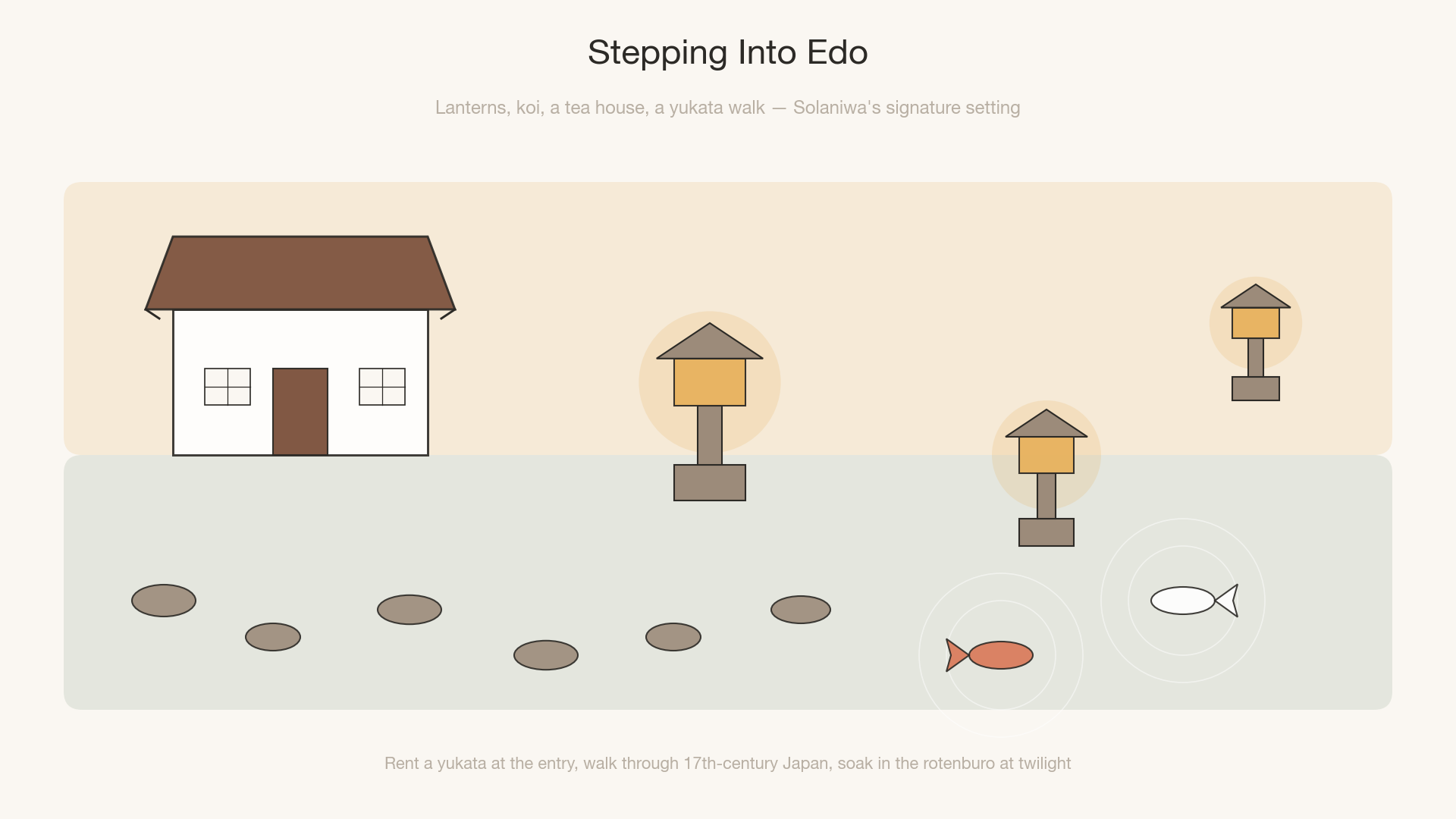
Solaniwa Onsen's central conceit is unusually well-executed. You arrive, remove your shoes at the entryway, check in, and are handed a rental yukata. The women's yukata selection runs to dozens of patterns—floral, geometric, seasonal. Men get fewer options but the quality is the same. You change in a dedicated changing area, pick up a himo (waist tie), and step out into the central garden.
The garden is the surprise. It's a proper outdoor Japanese garden on a raised courtyard—not a fake-looking prop, but a meticulously landscaped space with a koi pond, stone lanterns, a small bridge, seasonal plantings, and a full-size chashitsu (tea house) you can actually walk through. On warm evenings, the garden is lit by traditional-style lanterns, and because the facility sits on the Osaka Bay, you can occasionally see the lights of cargo ships in the distance through the garden gaps.
Around the perimeter of the garden are several distinct zones: the main bath and sauna entrance (one gendered side for women, one for men), the food street, the massage and ganban'yoku (heated-stone) rooms, and the ashiyu (foot bath) corridor. You can wear the yukata in all these areas; you remove it only when you enter the actual bathing zones.
This yukata-and-garden experience is what makes Solaniwa different from every other onsen on this list. Spa World is louder and more populist. DESSE is more polished and design-driven. Grand Chateau Kyobashi is more authentically local. Solaniwa is the most beautiful—and the most forgiving to foreigners who want an onsen experience that feels somewhat theatrical and Instagram-worthy in addition to functional.
Baths, Saunas, and Outdoor Rotenburo
The bathing area is large and well-designed. Each zone has its own distinct character — the table below maps out what's where:
- Indoor baths — Temp: 39–42°C · Gender: Segregated · Best for: Standard onsen soaks; carbonated pools available
- Outdoor rotenburo — Temp: 40–41°C · Gender: Segregated · Best for: Solaniwa's signature — magical at twilight or in winter
- Finnish sauna — Temp: 85–90°C · Gender: Segregated · Best for: Dry sauna with adjacent steam room
- Cold *mizuburo* — Temp: 17–18°C · Gender: Segregated · Best for: Forgiving for first-time totonou attempts
- *Ganban'yoku* — Temp: Warm stone · Gender: Mixed-gender · Best for: Gentle relaxation in sauna wear; couples & groups
- *Ashiyu* foot bath — Temp: Warm · Gender: Mixed-gender · Best for: Garden-side bench soak; couples favorite
The hot-spring source water (drawn from 1,000 m below the bay floor) runs in the primary indoor pool. A complete Solaniwa visit typically involves two rounds of the main bath area (with sauna), a stop at the ganban'yoku, a walk through the foot bath, and dinner at the food street — easily 3–4 hours.
Food, Games, and Yukata Rental
Solaniwa leans into the theme-park side of onsen culture in a way that Japanese locals find charming and foreigners find memorable. The food street inside the garden is designed to resemble an Edo-period festival row—lanterns, wooden facades, vendor-style counters—and serves a range of festival-style foods and proper sit-down meals.
Options typically include:
- Takoyaki and okonomiyaki (Osaka classics) at casual counters
- Ramen, udon, and soba at slightly more proper restaurants
- Yakitori and izakaya-style small plates
- Kakigori (shaved ice) and dorayaki for dessert
- Beer, sake, and highballs at standing counters
Prices are reasonable—budget ¥1,500–¥2,500 for dinner plus a drink.
The yukata rental is included in admission. The traditional game area includes Edo-period festival games like shateki (target shooting) and kingyo-sukui (goldfish scooping), typically ¥200–¥500 per play. Kids love it. Couples love it more.
Tattoo Policy and What Foreigners Should Know
Tattoos are conditionally accepted at Solaniwa Onsen — but only with full coverage by the facility's own concealing stickers, sold on-site. This is the most important detail for tattooed travelers, and it is often misreported in older English-language guides. Solaniwa's official tattoo policy page states that as a general rule, guests with tattoos, body art, irezumi, body painting, or stickers will not be admitted to the facility — unless every visible mark is fully covered with a tattoo-concealing sticker purchased from Solaniwa itself. Stickers come in several sizes and prices; a single visible tattoo discovered after admission will result in mandatory departure with no refund. If you cannot fully cover your tattoo with the facility's stickers, you will not be permitted to enter — please be advised. For travelers with extensive coverage who'd rather skip the sticker juggling, our list of openly tattoo-friendly onsen in Osaka covers smaller bathhouses with simpler entry rules.
For tattooed visitors who do plan to use the sticker workaround, build extra time into your visit. Buy stickers from the front desk before changing, apply them carefully (under a yukata, all marks must remain hidden — including ones above the yukata neckline or below short sleeves), and don't push the limits with very large work. If you have extensive tattoo coverage, KUDOCHI Shinsaibashi (private suites, no other guests) will be a less stressful experience.
Setting tattoos aside, signage is multilingual, the website has a fully functional English version with online booking, and staff are used to foreign visitors. Solaniwa has been a significant draw for international tourists since its opening and the experience is well-adapted to first-timers. If you have never been to a Japanese onsen in your life, this is a reasonable alternative to DESSE for a gentle, visually rewarding introduction—though the basic etiquette rules (shower before bath, no phones, tie up long hair) still apply.
Family-friendly? Yes. Children are welcome in the bath zones (gendered, standard Japanese rules) and the ganban'yoku and garden areas. Solaniwa is one of the best family onsen options in Osaka.
Access From Namba and Combining With USJ or Bay Cruise
Solaniwa Onsen is a 5-minute walk from Osakako Station (大阪港) on the Osaka Metro Chuo Line. From Namba, the trip runs 15–20 minutes (change once at Hommachi). From Umeda, slightly longer. Taxis from Dotonbori are roughly 20 minutes and ¥2,000.
The real geographic argument for Solaniwa is its proximity to the Osaka Bay tourist circuit. Within 10 minutes of the facility are:
- Universal Studios Japan (USJ) — 10 minutes by train with one transfer, reachable by the USJ dedicated train line
- Tempozan Harbor Village — 5 minutes on foot, includes the Osaka Bay Ferris Wheel and an outdoor promenade
- Kaiyukan Aquarium — 5 minutes on foot, one of the best aquariums in Japan
- Santa Maria Bay Cruise — departs from Tempozan
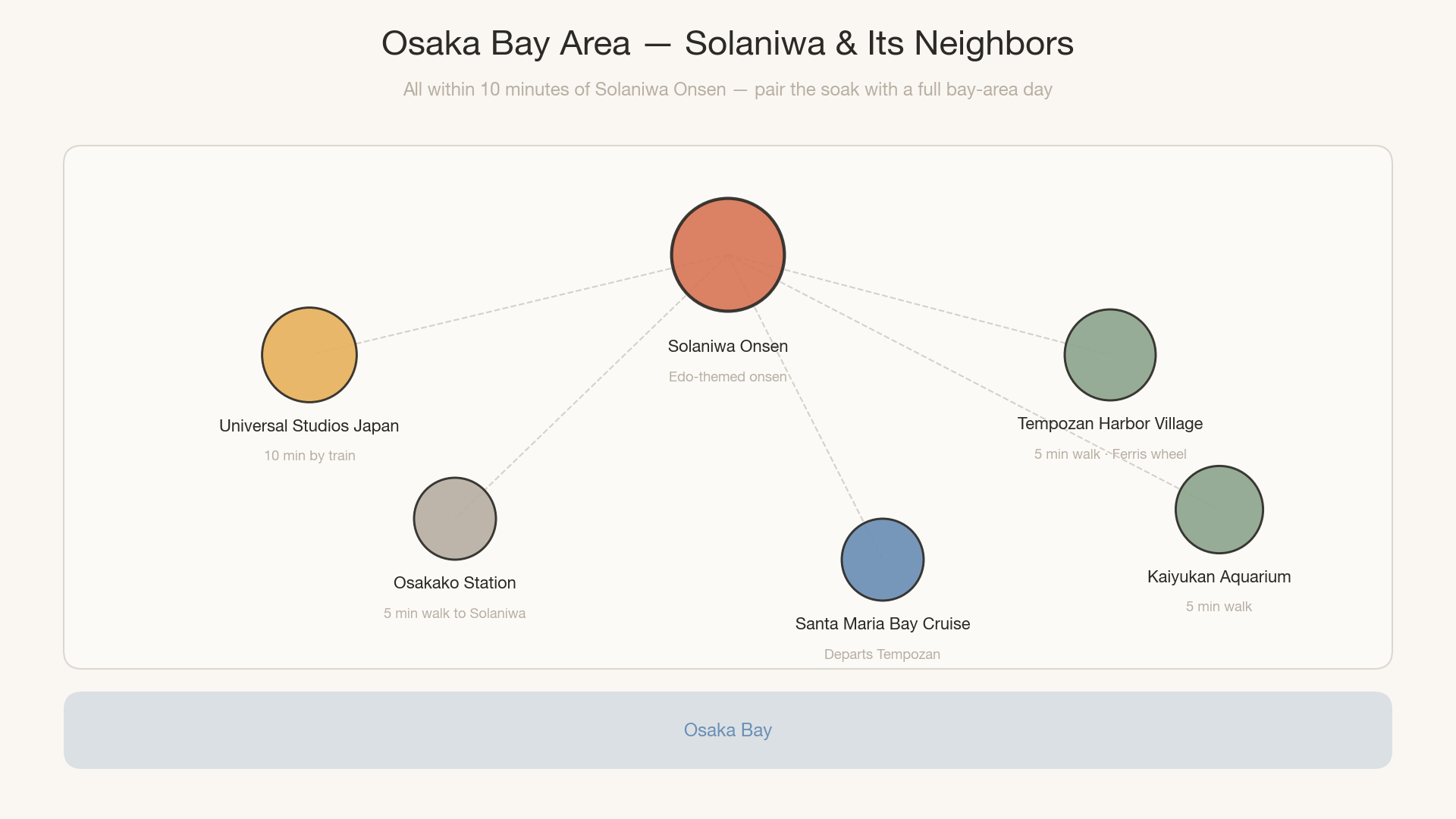
A classic foreign-visitor itinerary is a morning and afternoon at USJ — see our broader guide to Osaka's top theme parks for international visitors for the full lineup — followed by an evening soak at Solaniwa to reset exhausted legs before the train back to central Osaka. Alternatively, a family day at Kaiyukan in the afternoon plus a Solaniwa evening is a perfect low-stress full-day plan. If you've already worked through every onsen in the metro area, our roundup of the best hot springs near Osaka covers the day-trip-distance options worth a separate excursion.
Pro Tip: Go in the early evening (5–8 PM window). The outdoor garden lanterns come on around sunset, the outdoor rotenburo is at its most beautiful in twilight, and the food street is at peak atmosphere. This is also a less crowded window than weekend afternoons.
Website: https://solaniwa.com/en-us/
FAQ: Solaniwa Onsen Questions From Foreign Visitors
How much does it cost? Base admission runs roughly ¥2,500–¥3,400 depending on time of day and weekday/weekend. Additional options (extended stay, ganban'yoku full access) may add ¥300–¥800. The yukata rental is included.
Is Solaniwa tattoo-friendly? Conditionally. Tattoos are admitted only if fully covered with the facility's own concealing stickers, which you buy from the front desk before changing. Visible tattoos discovered after admission result in removal without refund. Stickers cannot be returned or exchanged. If your tattoo cannot be fully covered, plan on KUDOCHI Shinsaibashi instead.
Can I wear my own yukata? You can, but the rental is included in admission and the selection is good. Most visitors use the rental.
How long should I budget? Plan at least 3 hours for a complete experience. Four hours if you want to eat dinner and do the ganban'yoku.
Is it worth going with kids? Yes. The garden, the festival food street, and the games make it one of the best family onsen experiences in Osaka. Children are welcome in the bath zones under standard Japanese rules.
Can couples spend time together? Partly. The bathing areas are gender-segregated, but you can meet in the mixed-gender ganban'yoku rooms, the ashiyu foot bath, the garden, the food street, and the lounge. Plenty of together time available between the baths.
Is there English-speaking staff? Some, not universal. English website, multilingual signage, and staff used to foreign guests. Standard onsen etiquette still applies, so know the basic rules before you go.
Is this a natural hot spring? Yes. The main bath uses natural hot spring water drawn from 1,000 meters below the Osaka Bay floor. Mineral-rich and genuinely onsen-grade.
How Solaniwa Compares to Osaka's Other Major Saunas
Solaniwa is the most visually beautiful option in the lineup, but each of Osaka's flagship saunas serves a different traveler. The table below summarizes the differences:
- [DESSE (Shinsaibashi)](/articles/desse-sauna-osaka/) — Vibe: Premium, design-driven · Price: ¥3,500–¥4,500 · Tattoo: Conditional (Knot Sauna, Tattoo Days) · Best for: Sauna craft enthusiasts, polished first-timer
- [Spa World (Shinsekai)](/articles/spa-world-osaka-guide/) — Vibe: Populist, world-tour theme park · Price: ¥1,500–¥2,700 · Tattoo: Not allowed (any size, even stickers) · Best for: Families, budget travelers without tattoos
- Solaniwa Onsen (Bay Area) — *you are here* — Vibe: Edo-themed garden, scenic · Price: ¥2,500–¥3,400 · Tattoo: Conditional (facility's stickers required) · Best for: Couples, USJ / Kaiyukan day-trip pairing
- [Grand Chateau (Kyobashi)](/articles/grand-chateau-kyobashi-sauna/) — Vibe: Showa retro, men-only · Price: ¥900–¥1,800 · Tattoo: No published policy — call ahead · Best for: Repeat visitors chasing authentic texture
For the full lineup including private-suite and neighborhood-sento options, see our Osaka Sauna Guide for Foreigners.
Final Thoughts: The Visually Richest Onsen in Osaka
Solaniwa's specific niche in the Osaka bathing landscape is that it's the most aesthetic option. The sauna is good, not great. The baths are excellent. But what makes Solaniwa worth going out of your way for is the combination of the onsen itself with the Edo-era garden, the yukata walk, the food street, and the outdoor bath under winter stars or summer lanterns. It is the onsen you send a photograph of to friends back home to explain why you went to Japan in the first place.
For a foreign traveler, it slots perfectly into a Bay Area day—Kaiyukan, Tempozan, USJ—and elevates a standard tourist itinerary into something that ends with three hours of luxurious soaking in a storybook garden. That's the pitch. It works.
Compare Solaniwa with the other major players in our full Osaka Sauna Guide for Foreigners. For a completely different kind of bathing experience—the eight-story populist theme park in Shinsekai—see our Spa World review. For premium design-driven sauna culture in central Osaka, see DESSE Shinsaibashi.