Last updated: April 2026
Somewhere between 2019 and 2024, Japan quietly rediscovered the sauna. What started as a Tokyo subculture—popularized by the hit manga and TV drama Sado ("The Way of the Sauna"), driven by a generation of salarymen looking for a legal way to hit reset on their nervous systems—exploded into a full-blown national obsession. The Japanese even invented a new verb for it: totonou (ととのう), the state of dreamy, post-sauna euphoria that hits somewhere between the third and fourth set when your body, breath, and brain finally sync up and the world goes briefly, beautifully still.
For most of the boom, Tokyo hogged the spotlight. Shibuya got SaunaLab. Roppongi got Dormy Inn rooftops. Influencers queued around the block at 11 PM on a Tuesday. But in the last two years, something interesting has happened: the center of gravity for Japan's sauna scene has started to shift south. Osaka, a city that has always done pleasure better than Tokyo—the cheaper drinks, the warmer people, the food that actually tastes like something—has built what might now be the single most exciting sauna lineup in the country. Design-driven Finnish bathhouses in Shinsaibashi. An eight-story "world hot spring theme park" in Shinsekai. An Edo-era garden onsen on the bay. And tucked away in an unassuming tower in Kyobashi, one of the last authentic Showa-era sauna-and-cabaret complexes in Japan, still swinging after more than half a century.
If you are a foreigner visiting or living in Osaka—whether you have been chasing totonou for years back home or you have never set foot in a naked bathing facility in your life—this guide is your complete introduction to the city's sauna world. We will cover why Osaka is suddenly the sauna city to watch, how to behave in a sauna without embarrassing yourself (including the tattoo question that is the single most common source of anxiety for foreign visitors), a full rundown of the eight most interesting saunas in the city, and a practical section on prices, access, and what to bring. By the end, you will know exactly where to go, how to act, and which facility fits the kind of night—or morning, or midnight pit stop—you actually want.
Why Osaka Is Japan's Most Exciting Sauna City Right Now
Osaka's relationship with public bathing has always been a little different from Tokyo's. The city sits in the Kansai region, historically the soul of merchant Japan, and its sento (public bathhouses) and super sento (giant multi-bath complexes) have long been social spaces as much as hygienic ones. Where a Tokyo sento might feel like a utilitarian pitstop between a workday and a commute, an Osaka super sento is more like a neighborhood living room with water in it. Grandmothers show up at 10 AM. Office workers show up at 10 PM. Everyone compares notes on the new herbal bath.
So when the national sauna boom hit, Osaka was already primed. Existing super sento operators simply upgraded their sauna rooms, installed proper Finnish löyly (water-on-stones) setups, and lowered the temperature of their cold baths into the low teens Celsius. A new generation of Osaka-based entrepreneurs built something the city had never really had before: premium, design-focused, foreigner-friendly sauna "temples" where the sauna is not a side attraction but the whole point. DESSE in Shinsaibashi is the flagship of this movement. Wagamachi Sauna and KUDOCHI followed in 2024. And the old warhorses of Osaka bathing—Spa World, Solaniwa Onsen, Grand Chateau Kyobashi—rode the wave by leaning harder into what made them distinctive in the first place.
The result is a sauna lineup with more range than almost anything you will find in Tokyo. You can do world-class Finnish aufguss (towel-waving steam rituals) in the afternoon, soak in a Roman-themed bath the size of a swimming pool at 9 PM, and finish the night in a Showa-era sauna where the regulars still call the attendant "mama." For a foreigner with a long weekend, or for a resident working through a list, Osaka's sauna scene is unusually generous with texture.
The "totonou" thing, briefly explained
If you have never heard the word totonou, here is the short version. Japanese sauna culture has formalized what Finns have always known: the magic happens not inside the sauna but in the transition out of it. The canonical flow is (1) sit in a hot sauna room (typically 80–100°C) for 8–12 minutes until you are genuinely sweating, (2) rinse off quickly and submerge in a cold water bath (14–17°C is the Japanese sweet spot) for 30–90 seconds, and (3) sit still somewhere with air circulation—ideally outdoors, wrapped in a towel—for 5–10 minutes. Repeat three times. Somewhere in the second or third round, your nervous system will drop into something your daily life almost never gives it: a deep, wordless, unfocused stillness. That is totonou. It is the reason sauna culture now has an entire magazine industry in Japan. It is also, for many foreigners, the single best thing they do on their whole trip.
Sauna Etiquette for Foreigners: Before You Sweat
Japanese bathing facilities run on a set of unspoken rules that locals absorb as children and that foreigners sometimes trip over on their first visit. None of them are hard, and nobody is going to yell at you for a small mistake, but knowing the script ahead of time will save you a few awkward moments and mark you immediately as someone who belongs.
Tattoos are the single biggest question. Japan has a long cultural association between tattoos and organized crime, and most major bathing facilities in Osaka still enforce a no-tattoo policy. The reality on the ground is stricter than many travelers expect. Spa World, Wagamachi Sauna, and Nobeha no Yu Tsuruhashi all officially prohibit tattoos of any size, including tattoo stickers and ink stamps. Solaniwa Onsen requires that all tattoos be fully covered with the facility's own concealing stickers (sold on-site); a single visible tattoo will get you removed without refund. DESSE welcomes tattooed guests on the public sauna floors only on Tattoo Days (Wednesday through Saturday); on Sunday, Monday, and Tuesday, tattooed guests can still book the private Knot Sauna suite, where the policy is effectively unrestricted because it's a private rental. KUDOCHI's fully private suites are the most genuinely tattoo-friendly option in the city, since the only people in the room are the people you came with. For traditional sento like Suehiro-yu and Showa-era complexes like Grand Chateau Kyobashi, the published policy is either "allowed" on third-party directories or unstated entirely — call ahead. General rule: if a facility has no published tattoo policy, assume you may be turned away, and confirm by phone before you show up. Bathing in Japan with visible tattoos remains the exception, not the rule. If your priority is uncomplicated entry rather than the specific saunas profiled here, our roundup of tattoo-friendly onsen across Osaka covers smaller bathhouses outside this guide that openly welcome tattooed visitors. We flag the exact policy for each facility in the rundown below.
You enter naked. No exceptions. Japanese bathing is segregated by gender and fully nude. Do not wear a swimsuit in a traditional yu (bath) or sauna area. The only exceptions are specific mixed-gender facilities where you wear facility-provided sauna wear, which we note below.
Wash before you soak. Every facility has a row of sit-down showers with stools and hand-held nozzles. You scrub yourself thoroughly—really thoroughly—before entering any bath or sauna. Soap and shampoo are almost always provided. This is the single most important rule. Water in Japanese baths is communal and it stays clean because everyone who gets in is already spotless.
The small towel is not for covering up (mostly). You are given a small towel (tenugui-sized, about the size of a large napkin) and a large towel. The large towel stays in the locker room and is for drying off at the end. The small towel travels with you: you can fold it on top of your head in the sauna to keep your hair from overheating, use it to wipe sweat, and discreetly hold it in front of you when walking between the sauna and the bath. It should never, ever touch the bath water. Leave it outside the tub or fold it on top of your head.
The water bath rinse is mandatory. Before you step into the cold water bath (mizuburo), rinse the sweat off your body with the small ladle or hand shower next to the cold bath. Jumping straight from the sauna into the cold bath without rinsing is the single most visible breach of etiquette and will get you looks.
Long hair goes up. Tie it up or tuck it under the small towel. Hair in the communal water is deeply frowned upon.
No phones. No photos. Ever. Japanese bathing facilities are phone-free zones the moment you step past the locker room. Most now enforce this with signs in English. Even the lounge areas in mixed-use facilities like DESSE and Spa World typically forbid photography. This is a hard rule; violating it can get you permanently banned.
Talk softly or not at all. You can absolutely chat with a friend in the sauna or the bath, but keep your voice low and do not conduct loud conversations in English that make the rest of the room feel like a tourist attraction. Some sauna rooms now have TVs playing quietly; others are strictly silent.
The 8 Best Saunas in Osaka
We have split the lineup into three categories that correspond to three very different experiences. If you only have time for one, pick based on the vibe you actually want: premium design and serious sauna craft, a full-day super sento with multiple baths and food, or something older, weirder, and more distinctly Osaka.
Premium Finnish Saunas
1. DESSE (Shinsaibashi, 心斎橋)
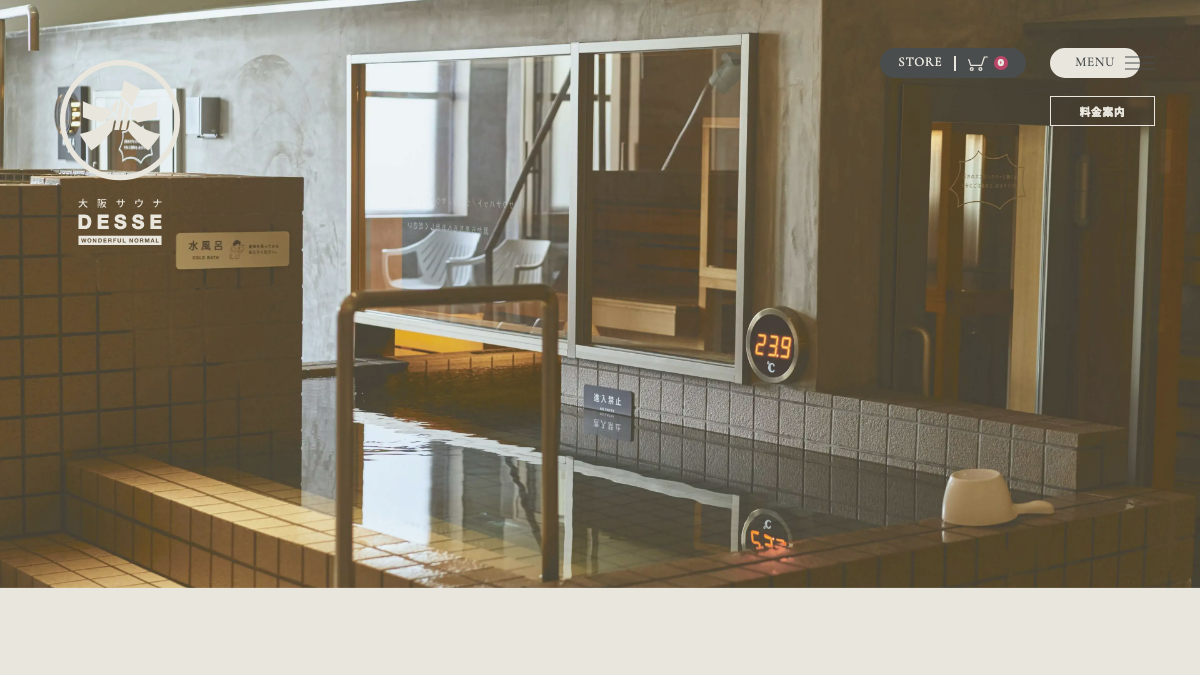
DESSE is the most talked-about sauna facility in Osaka right now and, in our opinion, the best overall introduction to premium Japanese sauna culture if you are new to it. It sits in a beautifully designed multi-floor space in the heart of the Shinsaibashi (心斎橋) shopping district, within easy walking distance of Namba (難波) and Dotonbori (道頓堀). The sauna rooms are proper Finnish-style löyly chambers with temperature control, aromatic water poured on the stones, and scheduled aufguss sessions run by trained staff. There are separate men's and women's floors, a mixed-gender lounge with food and drinks, and a carefully designed gaikiyoku (outdoor air-bathing) space where you can actually touch the Osaka sky between sets.
- Address: Shinsaibashi area (exact address on official site; ~3 min walk from Shinsaibashi Station)
- Price range: ¥3,500 – ¥4,500 (varies by weekday/weekend and peak hours)
- Tattoo policy: Conditional. Public sauna floors welcome tattooed guests on Tattoo Days (Wednesday through Saturday). On Sunday/Monday/Tuesday the public floors do not accept tattoos, but the private Knot Sauna suite is bookable any day for ¥20,000 / 120 min (1–6 people) with no policy restriction since it's a private rental. Always check the official schedule before booking.
- English: Staff English is basic but reliable; website has an English page
- Best for: Sauna enthusiasts, couples, women travelers who want a polished environment, first-timers who want the real deal without the intimidation of a traditional sento
- Pro Tip: Reserve online before you go, especially for weekend evenings. Walk-ins get turned away at peak times, and the experience is significantly better when the sauna isn't packed.
- Website: https://desse.osaka/
2. Wagamachi Sauna Osaka Noda (わがまちサウナ大阪野田, Fukushima)
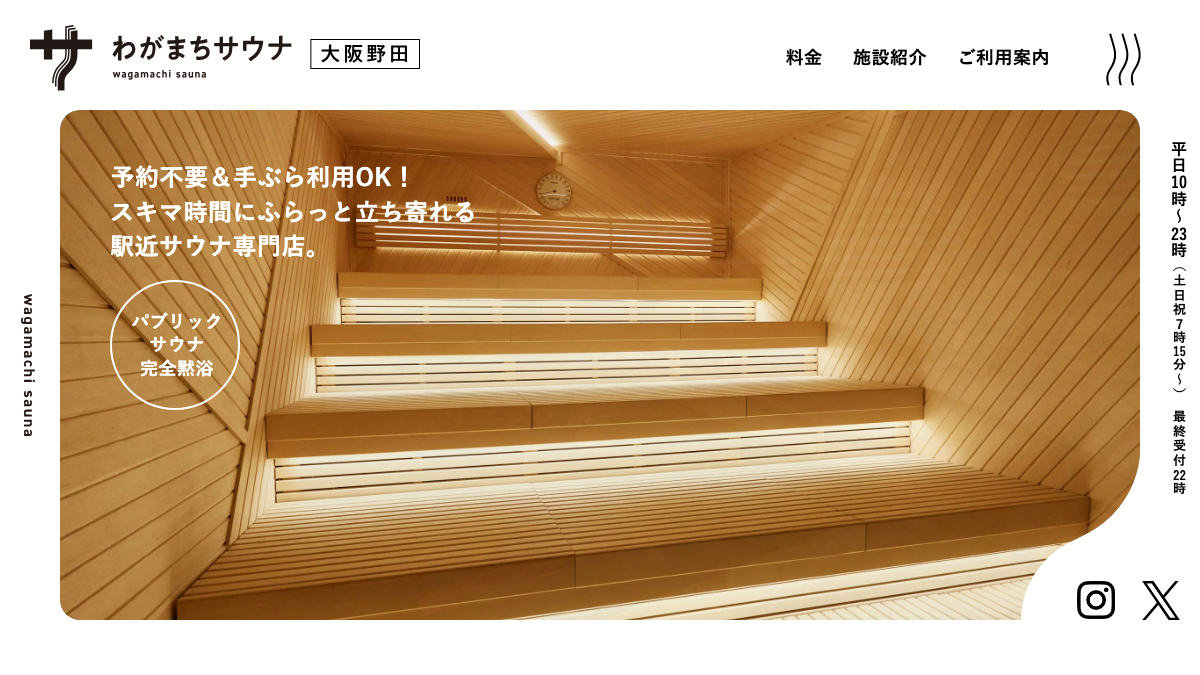
Opened in March 2024 just two minutes from Noda-Hanshin Station in the Fukushima ward, Wagamachi (literally "our town") Sauna is the most interesting recent addition to Osaka's affordable-but-serious sauna tier. The setup is unusually flexible for a Japanese sauna: an 18-person public sauna for the standard drop-in experience, plus separate private rental rooms that fit up to four people if you want to bring a group. The rooms run proper Finnish löyly with self-pour water on the stones, the cold bath bites at around 14°C, and the air-bath bench seating is genuinely thoughtful. Less spectacle than DESSE, less price tag too—this is what an Osaka neighborhood sauna looks like in 2026 when the operators actually care.
- Address: 1-1-4 Daikai, Fukushima-ku, Osaka (TAKUYO Building 4F, ~2 min from Noda-Hanshin Station)
- Hours: 10:00 – 23:00 weekdays; from 7:15 AM on weekends and holidays
- Price range: ¥1,450 (75 min, public) – ¥1,800 (2 hr, public). Private room rental ¥7,850 – ¥8,800 for up to 4 people
- Tattoo policy: Not allowed. Per the official FAQ, guests with tattoos (including fashion tattoos), body painting, and tattoo stickers are not permitted to use the facility. Please note that guests with tattoos cannot enter — please be advised.
- Best for: Travelers staying in Umeda, Fukushima, or near Noda who want a real, modern Osaka sauna at a fraction of DESSE's price
- Website: https://wagamachi-sauna.com/
3. KUDOCHI Sauna Shinsaibashi (心斎橋)
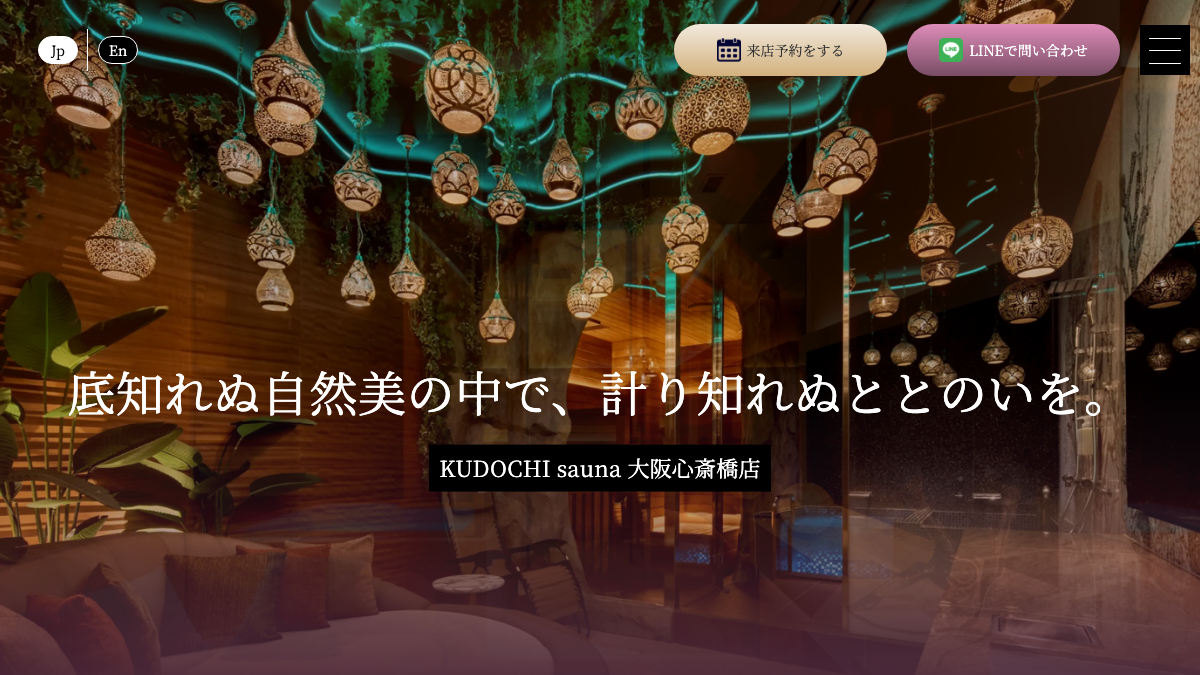
KUDOCHI is the answer to a question Osaka's premium sauna scene didn't have until 2024: what if you and your partner could just rent the sauna, alone, for 90 minutes? The Shinsaibashi branch sits in East Shinsaibashi (東心斎橋) and is built around seven fully private suites, each with its own self-löyly Finnish sauna and dedicated cold bath—temperature and humidity adjustable to taste. Reception is unmanned, the booking system is online and runs 24 hours, and the suites are licensed for mixed-gender use, which makes this the single best option in Osaka for couples or small mixed groups who don't want to split up by gender floor. No public-bathing dynamics, no etiquette anxiety, no strangers—just your group, the heat, and the cold water.
- Address: East Shinsaibashi (東心斎橋), short walk from Shinsaibashi Station; exact address on official site
- Hours: 24 hours (online booking required, unmanned reception)
- Price range: ¥6,000 (90 min) – ¥8,000 (120 min) – ¥12,000 (5-hr night plan). Per room, up to 6 people
- Tattoo policy: Allowed. KUDOCHI is fully tattoo-friendly — every suite is privately reserved for your group only, so there are no public-bathing constraints.
- Best for: Couples, small mixed-gender groups, first-timers anxious about public nudity, anyone who values privacy over communal vibe
- Website: https://kudochi-sauna.com/shinsaibashi/
Classic Super Sento Experiences
4. Spa World (Shinsekai, 新世界)
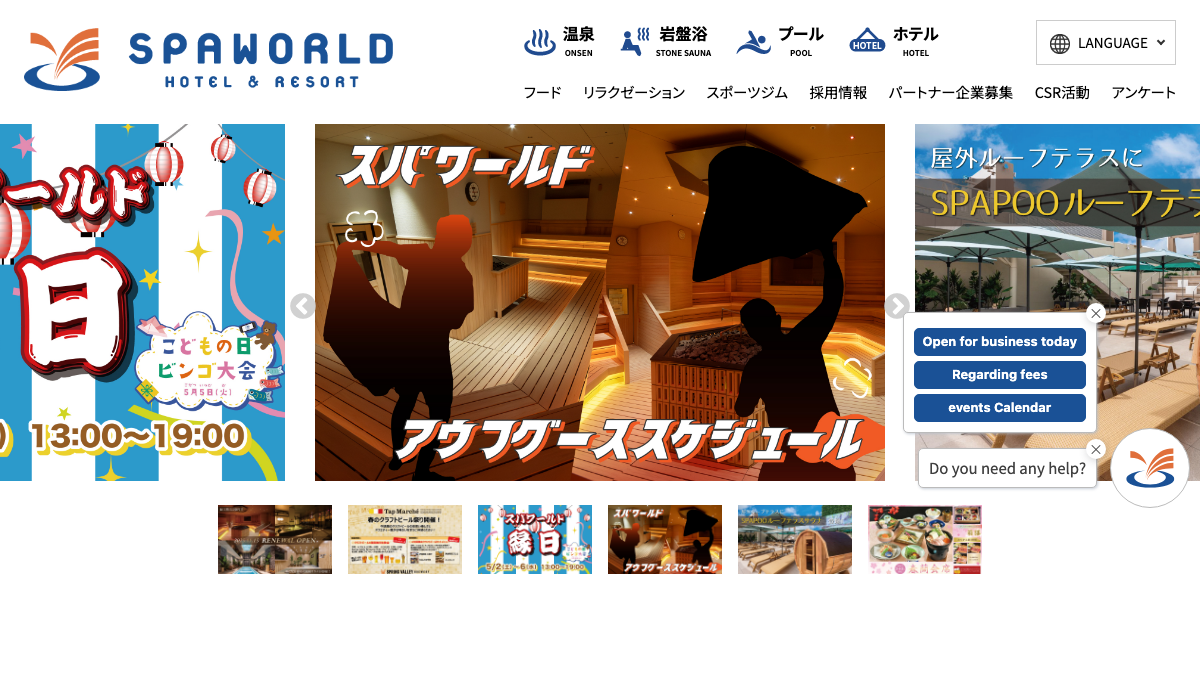
Spa World is the grand dame of Osaka bathing—an eight-story "world hot spring theme park" that has been towering over the Shinsekai (新世界) entertainment quarter since 1997 and still feels like a cheerfully chaotic fever dream of global bath culture. The two main floors are the "European Zone" (Roman, Greek, Finnish, Spanish, Atlantis) and the "Asian Zone" (Japanese, Bali, Islamic, Persian), and they swap between men and women monthly so that regulars get both in the course of a season. The saunas are numerous and genuinely varied—you'll find proper Finnish rooms, Turkish-style steam rooms, and a salt sauna, among others. On the upper floors there's a swimming pool, a restaurant zone, massage chairs, and nap capsules. For the price, nothing else in Japan gives you this much variety under one roof.
- Address: 3-4-24 Ebisu-Higashi, Naniwa-ku, Osaka (5 min from Dobutsuen-mae Station)
- Price range: ¥1,500 – ¥2,700 (highest value in this guide by far)
- Tattoo policy: Not allowed. The official English FAQ states: "Tattoos are NOT allowed in Spa World whether tattoo size is big or small (including tattoo ink, seals)." Please note that guests with tattoos cannot enter — please be advised.
- English: Signage is multilingual; online booking works in English
- Best for: Families, first-timers, travelers who want to combine a sauna with Shinsekai sightseeing (Tsutenkaku, kushikatsu)
- Pro Tip: Check online before you go to see which zone is men's and which is women's this month. If you specifically want to try the Finnish sauna in the European Zone, time your visit accordingly.
- Website: https://www.spaworld.co.jp/english/
5. Solaniwa Onsen (Bay Area, ベイエリア)
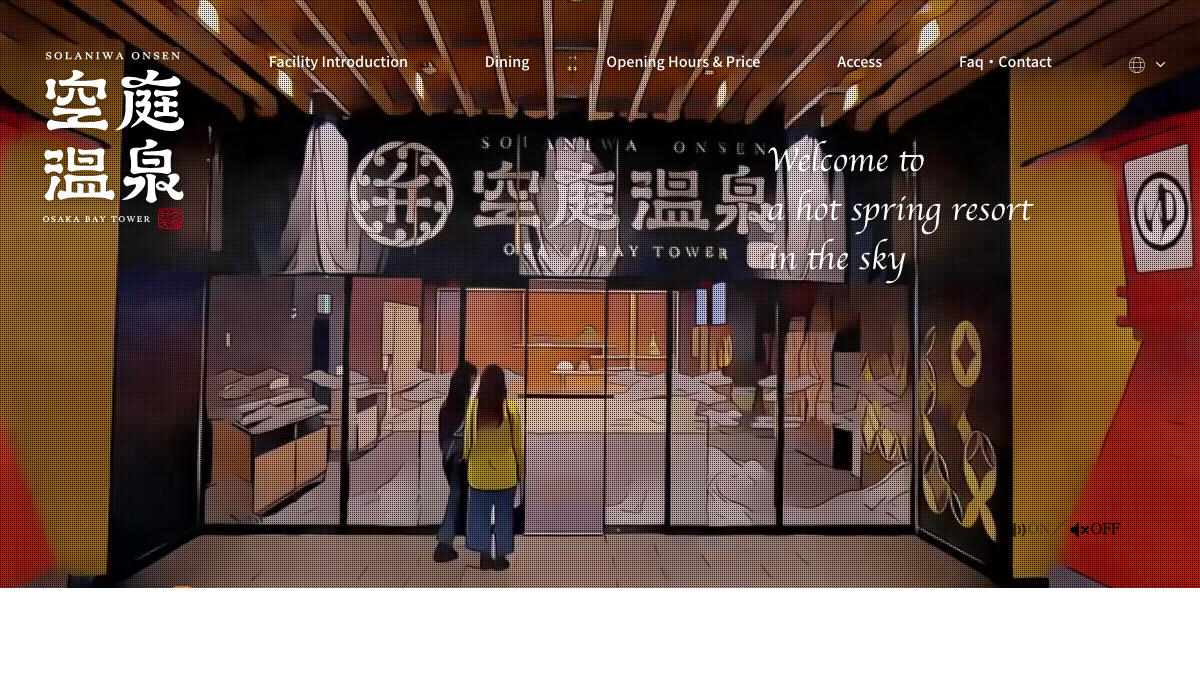
Solaniwa Onsen, a 15-minute train ride from Namba out to the Osaka Bay area, is the most beautiful large-scale onsen facility in the city. Built around an elaborate Edo-period-themed Japanese garden—complete with a koi pond, stone paths, and a full-size tea house you can walk through in a rented yukata—it feels less like a bath complex and more like a set from a period drama you're allowed to wander. The bath area itself includes a large outdoor rotenburo (open-air bath), multiple indoor pools, a Finnish-style sauna, a ganban'yoku (heated-stone bath) facility, and a scenic foot bath that runs alongside the garden.
- Address: 1-2-3 Izumi, Minato-ku, Osaka (5 min walk from Osakako Station)
- Price range: ¥2,500 – ¥3,400 (plus optional add-ons)
- Tattoo policy: Conditional. Per the official policy, guests with tattoos must fully cover them with the facility's tattoo-concealing stickers (sold on-site). Any visible tattoo discovered after admission results in mandatory departure with no refund. If you cannot fully cover your tattoo with stickers, you will not be permitted to enter.
- English: Good; well-established with international tourists
- Best for: Couples, families, travelers already visiting USJ or the Kaiyukan aquarium
- Pro Tip: Go on a weekday afternoon if you can. Weekends fill up fast, especially in winter when the outdoor bath with falling snow is a genuinely magical combination.
- Website: https://solaniwa.com/en-us/
6. Nobeha no Yu Tsuruhashi (延羽の湯 鶴橋)
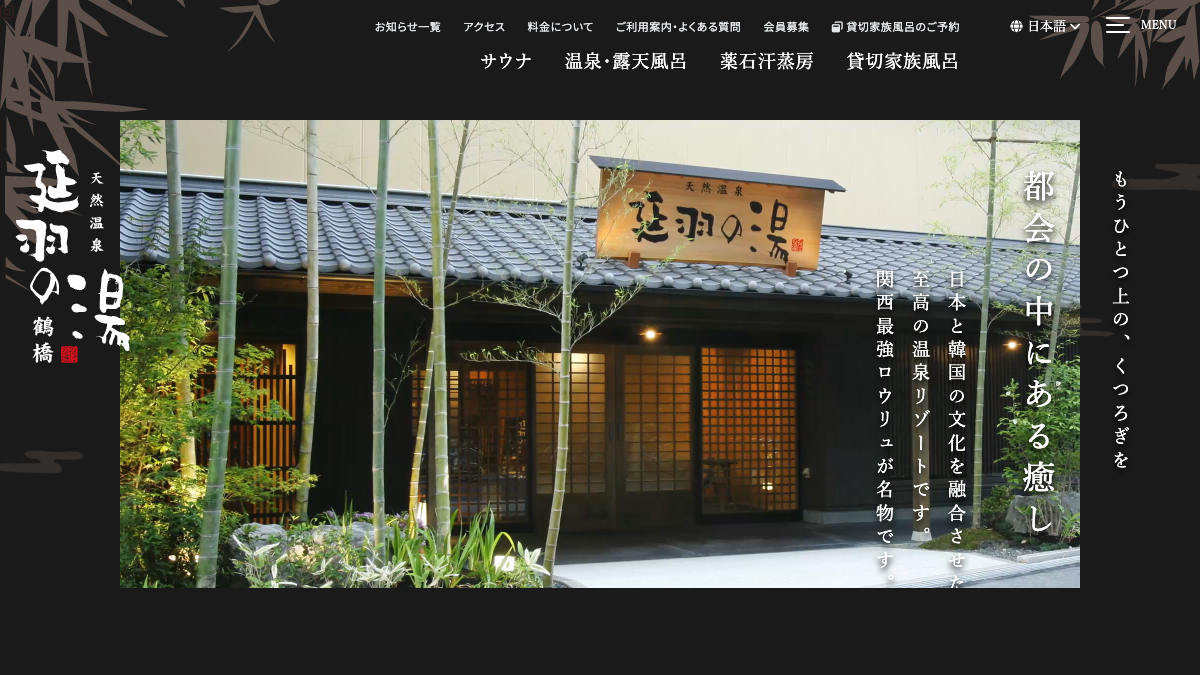
Tsuruhashi's neighborhood super sento, and a local favorite for its strong outdoor sauna and reasonable prices. Less famous than Solaniwa but arguably a better pure-sauna experience, especially for the gaikiyoku. Cash-friendly, minimal English, but a genuine Osaka local feel.
- Price range: ¥800 – ¥1,600
- Tattoo policy: Not allowed. The facility prohibits all tattoos, with no cover-sticker exception. Please note that guests with tattoos cannot enter — please be advised.
- Best for: Travelers exploring Tsuruhashi's Korean Town who want a cheap, authentic super sento experience
- Website: https://www.nobuta123.co.jp/nobehatsuruhashi/
Retro & Offbeat
7. Grand Chateau Kyobashi (京橋グランシャトー)
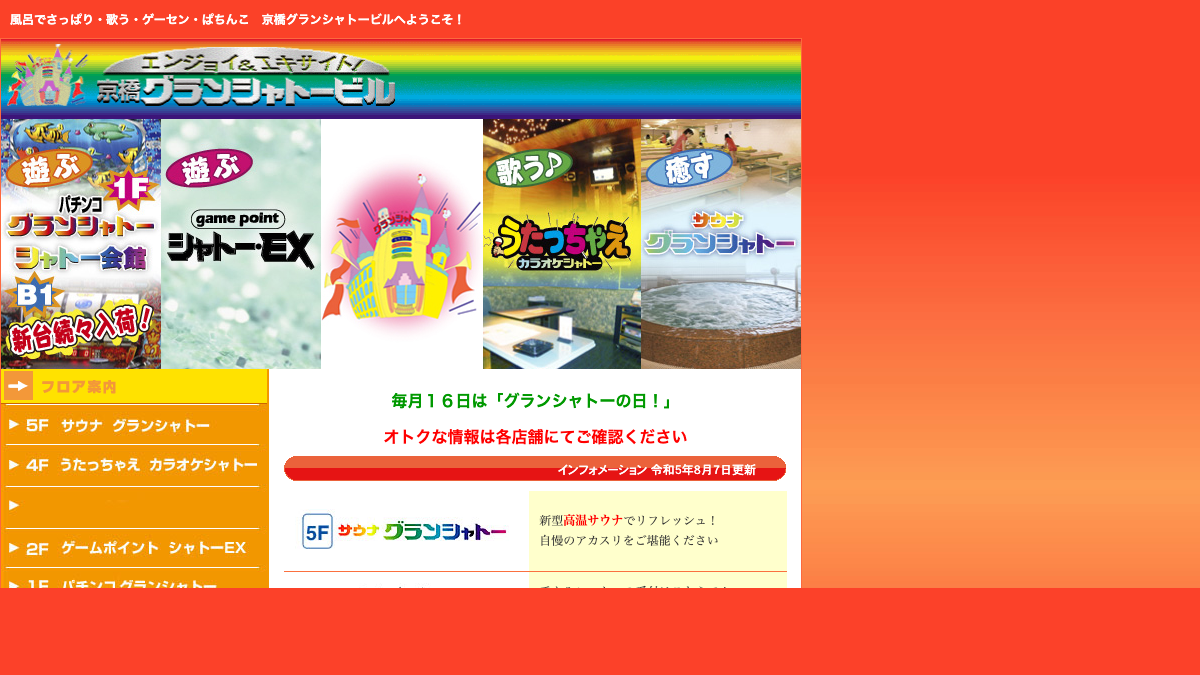
Grand Chateau Kyobashi is not really a sauna destination—it is a complete Showa-era entertainment tower that happens to include an old-school, men-only sauna floor (サウナグランシャトー on 5F is 男性客専用), and that is exactly the point. The building, located directly next to Kyobashi (京橋) Station on the JR Osaka Loop Line, has been a pillar of Osaka working-class culture since the 1960s, and its jingle—"Kyobashi wa ee toko dasse, Grand Chateau ga omasse" (京橋はええとこだっせ、グランシャトーがおまっせ)—is one of the most famous commercial earworms in all of Japan. The official site is at kyo-bashi.com, and it has somehow not changed much since 2005, which is also the point.
Inside: a cabaret, a theater, restaurant floors, and a genuine old-school sauna-bath floor where the regulars have been regulars for thirty years. This is the opposite of DESSE. You will not find design magazines about it. What you will find is a slice of Osaka bathhouse culture that is almost impossible to experience anywhere else, for the price of a coffee in Tokyo.
- Address: 2-1-26 Higashinodamachi, Miyakojima-ku, Osaka (30 sec from Kyobashi Station)
- Gender: Men only — the 5F sauna floor (サウナグランシャトー) is male-guests only. Female travelers can still visit the cabaret, karaoke, game arcade, and restaurant floors of the building
- Price range: ¥900 – ¥1,800 (sauna floor)
- Tattoo policy: No official policy is published on the facility's website or in major sauna directories. Travelers with tattoos should call ahead or ask at the desk before visiting. If the policy cannot be confirmed in advance, you may be turned away on arrival — please be advised.
- English: Minimal to none
- Best for: Male travelers who have already done one mainstream sauna and want a shot of authentic pre-gentrification Osaka
- Pro Tip: Go on a weekday evening, eat takoyaki at a standing stall outside first, and treat the whole building as the experience rather than just the sauna.
- Website: http://www.kyo-bashi.com/
8. Suehiro-yu (末広湯, Nihonbashi)
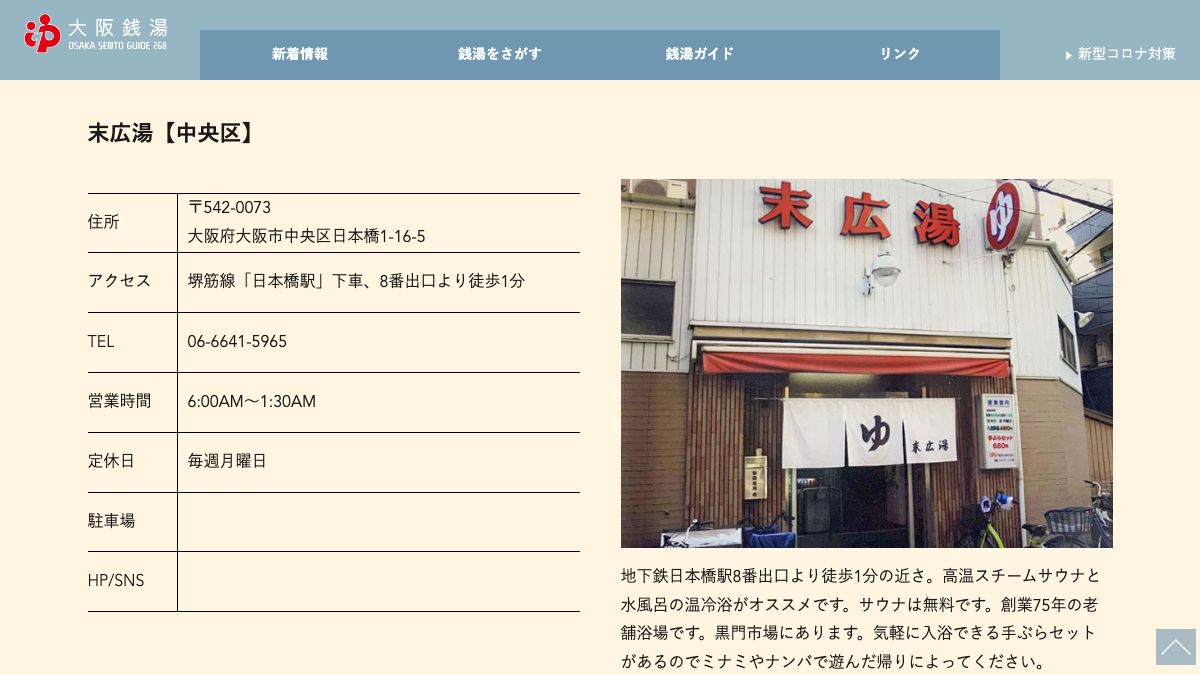
A 75-year-old neighborhood sento tucked into Nihonbashi 1-chome, one minute from Nipponbashi Station Exit 8 and a short walk from Kuromon Market. Suehiro-yu is the kind of place that has barely changed in a generation—tile floors, plastic stools, wooden lockers—and that includes the sauna, which is a small but genuinely hot steam room included free with the ¥600 admission. The cold bath next to it is perfectly serviceable. There is no English signage and the regulars are mostly local seniors, but the staff at the desk are friendly and the script (rinse, sit, sweat, rinse, cold dip) needs no language. If you are already eating your way through Kuromon, hunting figurines around Den-Den Town's anime and electronics shops, and want a ¥600 reset before dinner, this is the move.
- Address: 1-16-5 Nihonbashi, Chuo-ku, Osaka (1 min from Nipponbashi Station Exit 8, near Kuromon Market)
- Hours: 6:00 – 25:30 (1:30 AM); closed Mondays
- Price range: ¥600 (adult, sauna included free). Towel + amenity set ¥780
- Tattoo policy: Listed as allowed on the major sauna directory (sauna-ikitai), but the facility itself does not publish a written tattoo policy. It is safest to confirm with the front desk before entering, as small neighborhood *sento* policies can change without notice.
- Best for: Travelers near Kuromon Market or Den-Den Town who want a real, cheap, completely unfiltered Osaka sento experience
- Website: https://osaka268.com/sento/%E6%9C%AB-%E5%BA%83-%E6%B9%AF/
How to "Totonou" Like a Local
If this is your first time doing Japanese sauna properly, here is the exact flow the locals use. Learn it once and you'll have a template you can apply in any facility in this guide.
Round 1 — Warm up. Rinse off at the shower. Enter the sauna room. Sit on the lowest bench if it feels intense; middle or upper bench if you're comfortable. Stay 8–10 minutes. You should be clearly sweating by the end. Do not try to "tough out" a longer first round.
Transition. Exit, rinse the sweat off your body with the hand shower or ladle next to the cold bath. Step into the cold water bath. Breathe out slowly. Stay 45–90 seconds. Beginners sometimes panic; the panic passes in about 15 seconds.
Air bath. Go to the gaikiyoku (outdoor air bath) space or the cool-down benches. Sit. Close your eyes. Do nothing for 5–10 minutes. This is where totonou actually happens, not in the sauna.
Round 2 and 3. Repeat. Second round can go slightly longer in the sauna (10–12 min). Third round is often the money round—your body knows the rhythm now and the air-bath phase hits differently.
Hydrate constantly. Every facility has a water dispenser in the locker room and often drink vending near the baths. Drink a full glass between every round. Sauna dehydration is real and sneaks up on beginners.
Practical Info
Typical prices. Neighborhood sento with sauna: ¥600–¥1,000. Super sento like Spa World, Solaniwa: ¥1,500–¥3,400. Premium public saunas like DESSE: ¥3,000–¥5,000 per person. Modern neighborhood saunas like Wagamachi (Noda) sit cheaper at ¥1,450–¥1,800. Fully private suite facilities like KUDOCHI run ¥6,000–¥12,000 per room (split among up to 6 people).
What to bring. Honestly, not much. All reputable facilities rent or sell towels, and most premium saunas include them in the price. Bring: a phone (to store in the locker), cash or IC card, any small-tattoo cover stickers if you're going somewhere with a strict policy, and contact lenses if you wear them (take them out for the bath; the hot water will dry them out).
Late-night and 24-hour facilities. Spa World runs overnight with a surcharge and has capsule-style nap areas. Several independent sauna facilities in Umeda and Namba offer overnight stays for roughly ¥3,500–¥5,000, which can be a surprisingly good alternative to a business hotel after a late night in Dotonbori. (See our Osaka Nightlife Guide for what to do with the hours between the bar and the sauna.)
Payment. Premium and modern saunas (DESSE, KUDOCHI, Wagamachi) are card-friendly. Super sento are mixed—Spa World and Solaniwa take cards, neighborhood sento like Suehiro-yu often do not. Keep a few ¥1,000 notes on you.
Best time to go. Weekday mornings and weekday late nights (10 PM onwards) are the sweet spots. Weekend afternoons from 2 PM to 7 PM are the most crowded window everywhere.
FAQ: Your Osaka Sauna Questions Answered
Can I go to a sauna in Osaka with tattoos? It depends, and the honest answer is that most major Osaka bathing facilities still do not accept tattoos. Here is the breakdown by facility.
Fully tattoo-friendly: KUDOCHI Shinsaibashi (private suites only — no other guests to worry about).
Conditionally accepted: DESSE (public floors OK on Tattoo Days = Wednesday through Saturday; private Knot Sauna suite is bookable any day), and Solaniwa Onsen (tattoos must be fully covered with the facility's own concealing stickers, sold on-site; a single visible tattoo found after admission gets you removed with no refund).
Strictly prohibited: Spa World, Wagamachi Sauna, and Nobeha no Yu Tsuruhashi will all turn you away regardless of size, and stickers do not help — Spa World's English FAQ specifically prohibits tattoo seals as well.
No published policy: Grand Chateau Kyobashi and Suehiro-yu do not publish a formal tattoo policy on their websites; call ahead before visiting and assume you may be turned away if you cannot confirm in advance.
If you have visible tattoos and want a stress-free experience, KUDOCHI is the safest bet, with DESSE on a Tattoo Day as the second option. Carry skin-colored tattoo cover stickers from Don Quijote or Amazon Japan as a backup, but do not assume they will be accepted everywhere.
Do I have to be fully naked? In the bath and sauna areas of gender-segregated facilities, yes. In private-suite facilities like KUDOCHI, where your group has rented the sauna for itself, you wear your own swimwear or facility-provided sauna wear—the suite is yours alone, so the only people seeing you are the people you came with. The shared lounge at DESSE also uses sauna wear for mixed-gender access. You will never be asked to be nude in a mixed-gender space in Japan.
What about shaving or grooming before I go? No specific requirements. Go as you are. Japanese bathing culture is completely comfortable with natural bodies of all shapes, ages, and hair situations. The one rule is cleanliness, which you handle at the shower before entering any bath.
How long should I stay? Budget 90 minutes minimum for a proper three-round experience at a premium sauna. For a super sento like Spa World or Solaniwa, plan 3–4 hours. You can absolutely stay all day.
What's the best time of day for foreigners? Weekday afternoons are the friendliest—never empty, never crowded, staff have more time to help with English questions. Late evenings (after 10 PM) are the local vibe; busier, more serious saunnor, a little more intimidating but more atmospheric.
Can I sauna with a group of mixed-gender friends? Yes, at KUDOCHI (fully private suites for the whole group), and partially at DESSE (shared lounge between sets). Traditional super sento and sento are gender-segregated, but you can rejoin each other in the lounge, restaurant, or rest area after.
How is it different from Tokyo saunas? Shorter lines, cheaper prices across the board, and a noticeably warmer and more curious attitude toward foreign visitors. Tokyo's premium scene is more crowded and more expensive for roughly the same quality. Tattoo policies, however, are similarly restrictive in both cities — see the dedicated tattoo question above for facility-by-facility details.
Do I need to speak Japanese? Not really. Premium saunas have English websites and some English-speaking staff. Super sento have multilingual signage. Traditional sento and Grand Chateau are Japanese-only, but the actions involved (shower, sit, swim, sit) don't require much language once you know the script above.
Final Thoughts: An Osaka Sauna Day, Mapped Out
If you have one full day and you want to understand what Osaka's sauna scene can actually do, here is how we'd spend it.
Start mid-morning with a long, slow session at DESSE in Shinsaibashi. This sets the template: proper Finnish rooms, clean design, good air bath, a gentle introduction without the sen33sory overload of a super sento. Have a light lunch in the DESSE lounge or walk five minutes to an Amerikamura café.
Afternoon, train out to the bay and spend three hours at Solaniwa Onsen. The garden, the outdoor rotenburo, the yukata walk—it is the most visually beautiful sauna afternoon available in the city. If it's winter, sit in the outdoor bath as the sky goes dark.
Evening, train back to central Osaka and finish the day at Grand Chateau Kyobashi (male travelers only for the sauna floor — female travelers can still soak up the Showa vibes on the cabaret and restaurant floors, or swap in an evening session at Spa World instead). Not because the sauna is the best—it isn't—but because by 9 PM, after DESSE's polish and Solaniwa's beauty, the Showa-era strangeness of Kyobashi is exactly the contrast you need. Sauna, cold bath, put on a yukata, wander out for a steaming bowl of late-night ramen or takoyaki on the street, and you will understand why locals talk about Osaka the way they do.
That's the trip. Charge your phone, leave it in the locker, and go.
For a different kind of Osaka night, our Osaka Nightlife Guide covers the bars, clubs, and late-night ramen that pair perfectly with a post-sauna hunger. And if you're staying in Shinsaibashi, see our full DESSE review for the specifics on what to reserve and when to go.